

Heads up, golf fans! Some links in this post are affiliate links. If you click and make a purchase, we might earn a small commission at no extra cost to you. Thanks for helping The Golf Viking keep bringing you tips and gear reviews!
Topping the golf ball is one of the most absolutely frustrating problems in golf. The contact feels terrible, the ball barely gets off the ground, and it can quickly destroy your confidence—especially with irons and fairway woods.
The good news? Topping the ball is almost always a mechanical issue with a clear fix. It’s not about talent, strength, or even experience. It’s about low point control, posture, and sequencing. Come along with the golf viking as we tackle one of the biggest issues golfers face when trying to hit a solid strike on the ball.
Topping the ball is a common struggle for many golfers, and it’s frustrating when you just can’t get that clean shot. A few usual suspects might be causing this issue. Let’s start by checking out what you’re doing with your body during the swing. If your posture is off, or if you’re standing too tall, that’s bound to mess with the strike, making you top the ball.
Another biggie could be your weight distribution. If your weight is shifting all over the place instead of being centered, that ball ain’t gonna fly like you want it to. Add to that a poor grip or inconsistent swing arc, and you’ve got a recipe for a top shot.
On the flip side, it’s not just about the physical side of things. The mental game matters too. Maybe you’re too eager to see where the ball’s headed and you’re lifting your head too early. Or you’re anxious about messing up, leading to rushed or tentative swings.
Topping not only affects your confidence but messes with the ball’s roll and distance. It takes that ‘thwack’ out of your game and replaces it with a sad thud. So understanding these roots of the issue is key to figuring out your way back to solid, confident shots.
In this guide, you’ll learn:
The most common causes of topped shots
Simple swing fixes that work immediately
Drills you can use on the range and at home
Setup adjustments that prevent tops before the swing even starts
By the end, you’ll understand exactly why you top the golf ball—and how to stop it for good.
Topping the ball is rarely just one mistake — it usually comes from issues with posture, sequencing, and low-point control across the entire motion. Fixing it permanently means understanding how the full swing works together, which is exactly what’s covered in this step-by-step guide to mastering the golf swing.
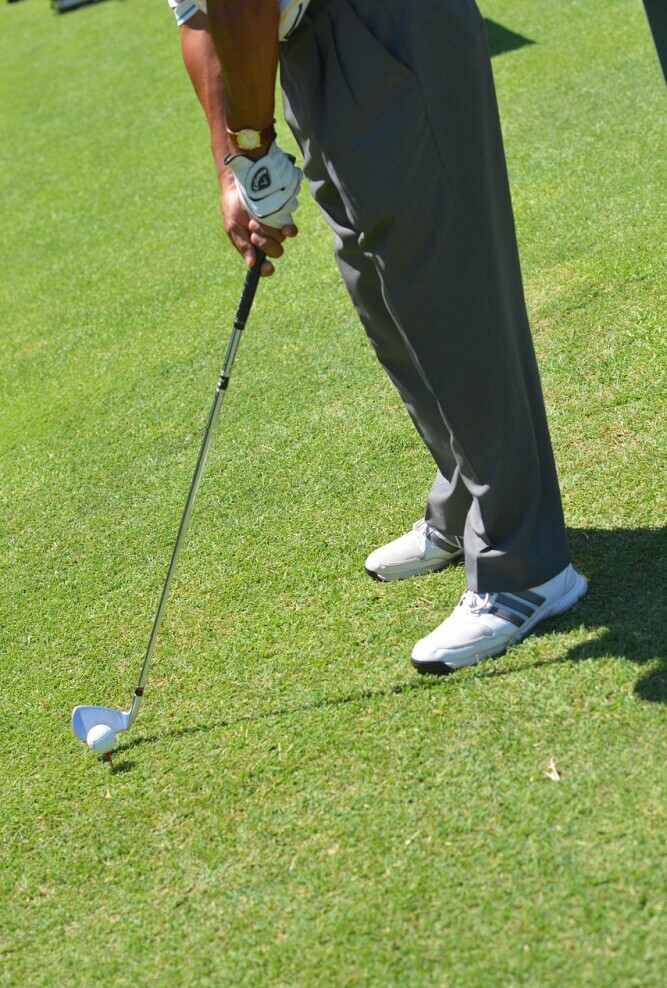
What Does “Topping the Golf Ball” Mean?
A topped shot happens when the club strikes the upper half of the golf ball instead of compressing it against the turf.
This usually results in:
A low, rolling shot
Weak distance
Poor trajectory
Inconsistent ball flight
In proper iron contact, the club should hit:
Ball → then turf
When you top the ball, the club bottoms out too early or lifts too soon, causing it to strike above the ball’s equator.
The Real Root Cause: Poor Low Point Control
Every golf swing has a “low point” — the lowest part of the club’s arc.
With irons, the low point should be:
Slightly in front of the golf ball.
When you top the ball, the low point is usually:
Behind the ball
At the ball
Or rising before impact
This happens because of:
Standing up in the swing
Scooping the ball
Leaning back
Losing posture
Trying to “help” the ball into the air
Fix the low point → you fix topping.
Interestingly, many golfers who top the ball also struggle with heavy contact at times because both issues come from inconsistent low-point control. If you’re dealing with that pattern, this guide on how to stop hitting fat shots will help you stabilize your strike.
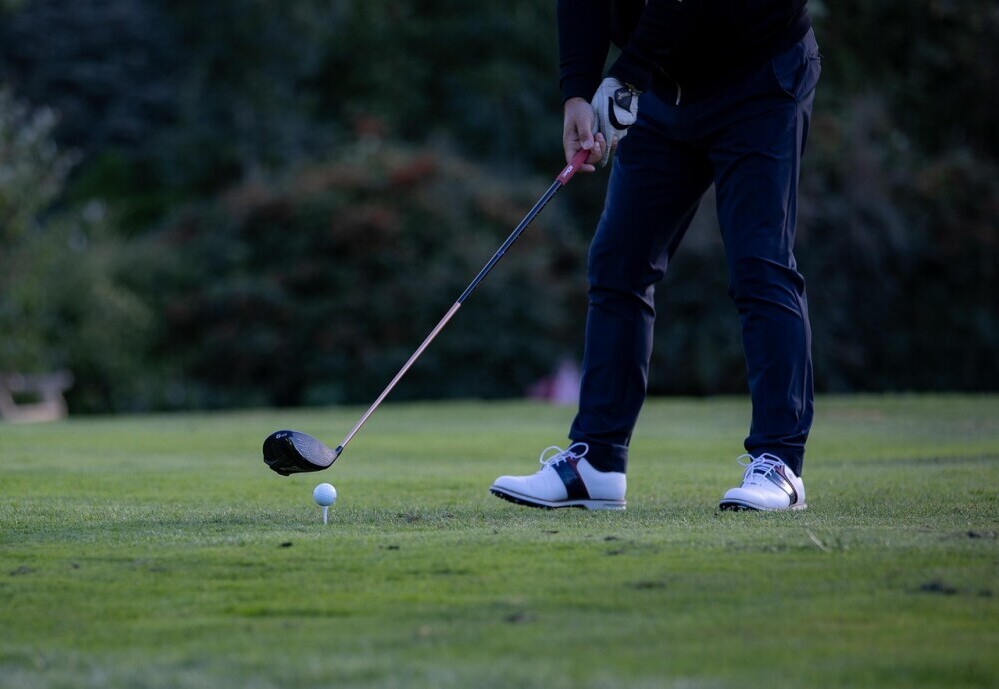
8 Common Causes of Topping the Golf Ball
1) Standing Up Through Impact (Early Extension)
One of the biggest causes.
Your hips move toward the ball during the downswing, your chest rises, and the club lifts.
Result: the club strikes the top half of the ball.
Signs:
Thin and topped shots
Heel strikes
Loss of posture at impact
2) Trying to Lift the Ball
This is especially common for beginners.
You subconsciously try to help the ball into the air instead of trusting the loft of the club.
Ironically, this causes:
Scooping
Leaning back
Loss of compression
The ball stays low or gets topped.
3) Poor Weight Transfer
If your weight stays on your back foot, your swing bottoms out too early.
The club reaches the ground before the ball → then rises → top.
4) Ball Position Too Far Forward
When the ball creeps too far forward in your stance:
The club has already started rising
Contact happens late
The strike becomes thin or topped
5) Lifting Your Head
“Keep your head down” isn’t perfect advice—but lifting your head too early does change posture and raise the swing arc.
That leads to topped shots.
6) Overswinging
Trying to swing harder often causes:
Loss of balance
Early release
Timing issues
Which leads to inconsistent contact.
7) Poor Posture at Setup
Standing too tall makes it harder to reach the ball consistently.
You’ll instinctively:
Adjust during the swing
Rise up
Lose contact
8) Fear of Hitting the Ground
Many golfers subconsciously avoid turf contact.
But iron shots require turf contact after the ball.
Avoiding the ground = lifting the club = topping.
Quick Setup Fixes That Prevent Topped Shots
Before changing your swing, fix these fundamentals.
Proper ball position
Short irons → center of stance
Mid irons → slightly forward
Long irons → just inside lead heel
Too forward = topping.
Athletic Posture
Bend from hips
Slight knee flex
Chest over the ball
Arms hanging naturally
You should feel:
Balanced and stable—not tall and upright.
Weight Slightly Forward
Start with:
55–60% weight on your lead foot
This promotes:
Ball-first contact.
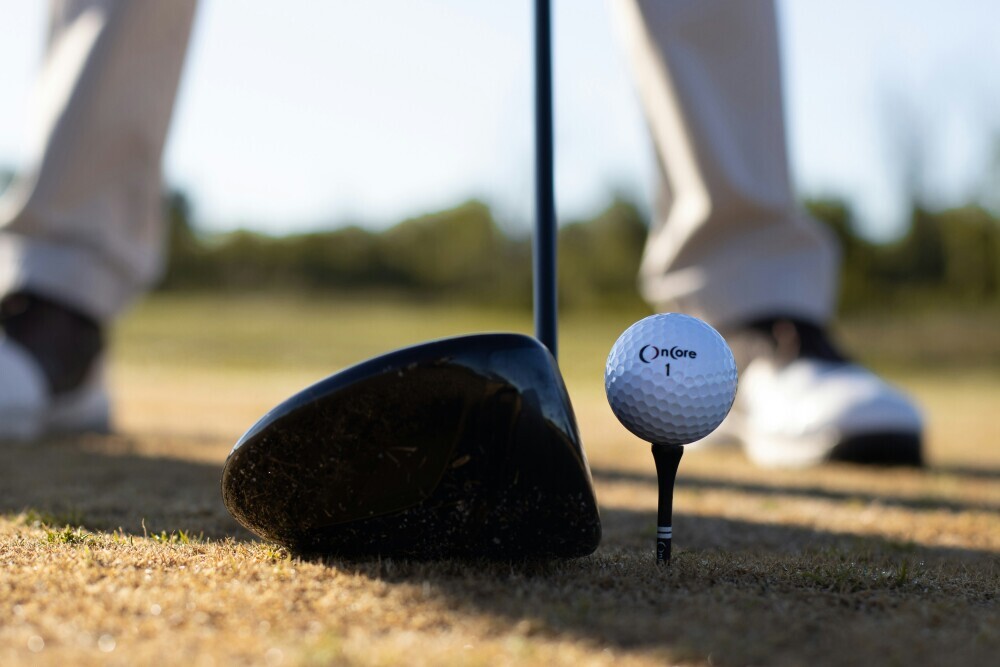
Techniques to Correct Your Swing and Improve Ball Contact
Getting your swing right is where all the magic happens when it comes to stopping those topped shots. It kicks off with your stance. A strong, balanced stance is the foundation. Think about where your feet are and how you’re aligning with the ball. Feel grounded and steady before launching into the swing.
So, what about that swing? Smooth and steady wins the race. Try focusing on maintaining a proper swing arc. Keeping your club head low to the ground on takeaway and through impact helps prevent those awkward top shots. Balance is key, and with practice, you’ll feel the swing becoming more fluid.
Don’t underestimate the value of follow-through. Ever notice how solid those professional swings look, right till the end? That’s because a consistent follow-through transfers all that good energy to the ball. It’s like completing a sentence — finish it strong!
Practice drills make perfect, especially when trimming down those topping tendencies. Practice with drills that encourage better contact, like hitting from a tee or focusing on slow-motion swings to really fine-tune your form. Drills are like those mini-revelations that can fix swing issues one step at a time.
In the end, it’s all about keeping it smooth, consistent, and in control for that perfect shot. With a bit of persistence, you’ll notice your shots lift off beautifully into the air, making your game a lot more fun to play.
6 Easy Swing Fixes That Stop Topping
These are practical changes you can feel immediately.
Fix #1: Hit Down on the Ball
Iron shots require a downward strike.
Think:
“Compress, don’t lift.”
Feel like:
Hands ahead of the ball
Chest over the ball
Ball gets in the way of the turf
Fix #2: Maintain Spine Angle
Your posture at setup should stay stable through impact.
Feel:
Chest stays down
Head stays behind the ball
No sudden “standing up”
Fix #3: Rotate, Don’t Lift
Focus on turning your body through the shot.
When rotation stops:
Hands flip → club lifts → top.
Fix #4: Finish Low and Left
This is a powerful feel for iron shots.
After impact:
Club exits low
Moves left of target
This prevents scooping.
Fix #5: Slow Down Your Swing
Control improves contact.
Try swinging at:
70% effort
You’ll often strike the ball cleaner instantly.
Fix #6: Keep Pressure in Lead Foot
Through impact:
Feel weight moving forward
Belt buckle facing target
This keeps the low point ahead of the ball.

Best Drills to Stop Topping the Golf Ball
These drills are simple and extremely effective.
Drill 1: Towel Behind the Ball
Place a small towel:
3–4 inches behind the ball
Goal:
Miss the towel and strike ball first.
If you hit the towel → your low point is too far back.
Drill 2: Line in the Turf
Draw a line on the range mat or ground.
Practice:
Hitting the line after the ball
You should see:
Divot starting after the line.
Drill 3: Lead Foot Pressure Drill
Set up normally, then:
Lift trail heel slightly
Hit half swings.
This forces:
Weight forward → better contact.
Drill 4: Half Swing Compression Drill
Make waist-high swings.
Focus on:
Solid contact
Ball-first strike
Controlled tempo
Build consistency before full swings.
Drill 5: Impact Bag Drill
Hit into an impact bag or pillow.
Focus on:
Hands ahead
Chest forward
Stable posture
This trains proper impact position.
How to Stop Topping Specific Clubs
Irons
Most common topping issues happen here.
Focus on:
Ball-first contact
Weight forward
Compression
Fairway Woods
Often topped due to:
Trying to lift the ball.
Fix:
Sweep, don’t scoop
Ball slightly forward
Smooth tempo
Driver
Topping driver usually means:
Standing up
Losing posture
Reaching
Fix:
Stay behind the ball
Swing up, not lift
Maintain spine tilt
Thin contact often leads to offline iron shots because the face and path become harder to control at impact. If accuracy is also a problem, this breakdown on how to hit irons straight will help you tighten your alignment and face control.
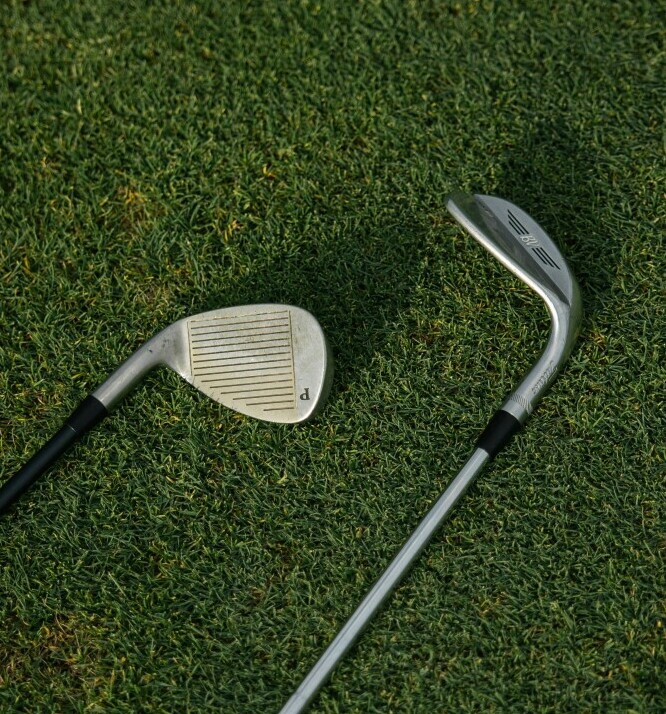
Tools and Equipment: Ensuring You Have the Right Gear
Having the right gear can make a world of difference in solving the problem of topping the golf ball. Clubs that are too short or too long can disrupt your swing length and make solid contact a struggle. It’s all about getting that gear dialed in to fit like a glove.
Let’s talk grips for a second. A good grip feels comfortable and steady in your hands. Too big or too small, and it’s like trying to hold onto a wet fish. So, finding a grip size that lets you hold the club naturally is essential for those clean hits.
Regular equipment check-ups aren’t just for cars—they’re crucial for your golf game too. Making sure your clubs aren’t worn out, or your grips haven’t turned into slicks, keeps everything in top condition.
Mental Mistakes That Cause Topping
Fear of Hitting the Ground
Many golfers think:
“If I hit the ground, it’s a bad swing.”
But iron swings REQUIRE turf interaction.
Change mindset:
Divot after the ball = great contact.
Trying Too Hard
Tension ruins sequencing.
Relax:
Let the swing flow.
Outcome Focus
Thinking:
“Don’t top it.”
Instead focus on:
Balance
Contact
Rhythm

Mindset and Strategies: Mental Approaches to Enhance Your Game
Before hitting the course, getting your head in the game can be the secret sauce for tackling topped shots. Playing confident, without a cloud of doubt looming over your swing, goes a long way. Sure, mechanics matter, but don’t overlook the mental approach.
Visualization techniques can really sharpen your mental game. Picture the swing in your mind, from the backswing to the satisfying point of impact. Visualizing successful shots can help transfer them to reality, allowing for smoother, more effective swings when you’re out there on the green.
A solid pre-shot routine isn’t just for the pros; it’s a game-changer for all of us. This could be as simple as a consistent setup or a quick mental checklist before each shot. A routine calms those nerves and channels focus, ensuring all the practice pays off when it matters.
Mental resilience plays a huge role in maintaining consistency. There will be days when topping happens regardless of preparation. Shaking off those tough moments and staying positive and determined helps keep the game enjoyable. It’s like taking each shot as a fresh start.
With the right mindset, not only does the technique improve, but the enjoyment and love for the game grow too. Golf’s as much about what’s in your head as what’s in your hands, and keeping both in sync makes for a more rewarding experience. is
A Simple Practice Plan to Eliminate Topped Shots
Use this routine on the range.
Step 1: Half Swings (10 balls)
Focus on:
Ball-first contact
Step 2: Towel Drill (10 balls)
Train low point.
Step 3: Full Swings at 70% (15 balls)
Prioritize:
Solid contact over distance.
Step 4: Random Targets (10 balls)
Simulate course play.
Repeat weekly and you’ll see major improvement.
How Long Does It Take to Fix Topping?
Most golfers improve quickly because topping is usually mechanical—not skill-based.
Typical timeline:
Immediate improvement with setup fixes
Noticeable consistency in 1–2 range sessions
Long-term habit change in 3–4 weeks
Consistency matters more than intensity.

Frequently Asked Questions
Why do I top the ball even when I swing slowly?
Because the issue is usually posture or low point—not speed.
Slow swings with poor mechanics still produce topped shots.
Is topping the same as hitting it thin?
Not exactly.
Thin shots = strike near middle but slightly high.
Topped shots = strike upper half of the ball.
Should I try to “hit down” more?
Yes—with irons.
But it should feel like:
Compression, not chopping.
Does topping mean my clubs are the wrong length?
Sometimes.
Clubs that are too short can force posture changes.
But most topping comes from technique.
Final Thoughts: The Real Secret to Clean Contact
Topping the golf ball isn’t a mystery.
It almost always comes down to:
Low point control
Posture stability
Proper weight shift
Trusting the loft of the club
When you:
Stay in posture
Keep weight forward
Strike ball first
You stop topping naturally.
Focus less on lifting the ball…
And more on compressing it.
That’s the difference between inconsistent contact and solid, confident ball-striking.
Next Step in the Swing Improvement Process
If you’re working on contact consistency, the next step is learning how to control your strike pattern and trajectory.
From here, the best follow-up topics in your swing improvement journey are:
Fixing fat shots
Hitting irons straight
Improving divot pattern
Mastering low point control
Because once you stop topping the ball…
You’re on your way to becoming a consistent ball striker.