

If you want to lower your scores fast, there is no better place to focus than your short game. The short game is where the magic happens in golf. It’s not just about swinging big, it’s mastering those tiny details that make a huge impact on your scorecard.
Whether you’re sinking those tricky putts or pulling off a perfect chip shot, a rock-solid short game is key. That’s why the golf viking has personally taken it upon himself to make this essential short game practice drills guide.
You can hit 300-yard drives and stripe irons all day long, but if you struggle from 100 yards and in, you’re leaving strokes on the course every single round. In fact, most amateur golfers lose 5–10 shots per round purely because of poor chipping, pitching, and putting.
The good news?
The short game is also the easiest part of golf to improve.
You don’t need elite athleticism, expensive equipment, or perfect swing mechanics. You need smart practice, quality drills, and consistency.
In the golf vikings’ short game practice drills guide, you’ll find:
The best short game practice drills for chipping, pitching, bunker play, and putting
Structured routines you can use at the range or at home
Pro-style challenges that make practice more effective and fun
A complete system to turn your short game into a scoring weapon
Whether you’re trying to break 100, 90, or even 80, these drills will help you start saving strokes immediately.
Let’s dive in.
First things first, let’s talk equipment. The right wedge or putter in hand makes a world of difference. These aren’t just tools of the trade; they’re your trusted allies. Picking the right one can feel a little like magic once you’ve got a feel for it.
Understanding your wedges and their loft, as well as mastering your putter’s weight and balance, is crucial. Think of it like tuning an instrument before a big performance.
Next, building confidence in chipping and pitching. A solid swing is just part of the equation. It’s also about understanding the feel and touch needed to drop the ball just where you want it.
Practice different distances and lies, and soon you’ll be thinking less about technique and feeling more like a natural. This is where repetition pays off – practice until the swing feels second nature.
And let’s not skimp on addressing common obstacles. Maybe it’s sand bunkers that send chills down your spine, or those downhill putts that seem to have a mind of their own. Getting clear about common pitfalls allows you to tackle them head-on.
So let’s break down those challenges, unclog the mystery, and whip your short game into fighting shape. Think of it as your secret arsenal on the course.
If you’re looking to completely upgrade your entire short game, check out my short game mastery guide.

Why the Short Game Is Where Scores Are Made
Before we get into drills, it’s important to understand why the short game matters so much.
On a par-72 course:
You hit 14 drives
Maybe 30–35 full iron shots
But you’ll hit 30–40 shots from inside 100 yards, including chips, pitches, bunker shots, and putts
That means nearly half your strokes come from the short game.
If you can:
Chip it close instead of leaving it 20 feet away
Get up and down instead of two-chipping
Avoid three-putts
You can drop 5–10 strokes without changing your full swing at all.
That’s why great players always say:
“The short game is where tournaments are won.”
Now let’s build yours.
How to Practice the Short Game the Right Way
Most golfers make the same mistake when practicing the short game:
They drop a bucket of balls and mindlessly chip to the same hole over and over.
That builds zero real skill.
Effective short game practice should be:
Target-based
Distance-focused
Randomized
Pressure-oriented
In other words, you want to practice like you play.
The drills below are designed to do exactly that.
If you’re looking for the best clubs to work on your short game, check out my top 10 best clubs for backspin.
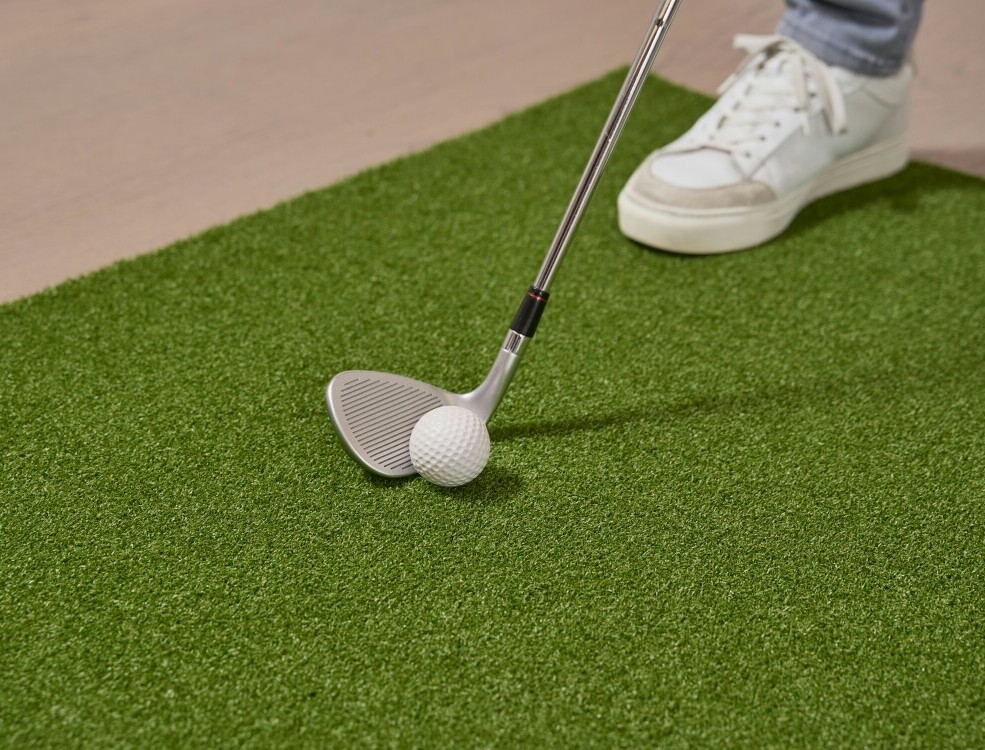
Essential Chipping Drills
Getting started with short game drills is like setting up the foundation for a really solid golf game. It’s not just about hitting the ball; it’s about developing control, touch, and precision. These drills will have you thinking smart and playing smart.
Chipping is the fastest way to save strokes. A great chipper can turn missed greens into stress-free pars.
1. The Landing Spot Drill
Purpose: Improve distance control and consistency
How to do it:
Place a towel or alignment stick on the green about 3–5 feet onto the putting surface
Pick a hole beyond that landing zone
Chip 10 balls trying to land each one on or just short of the towel
Why it works:
Great chippers don’t focus on the hole—they focus on the landing spot. This drill trains your eyes and hands to control trajectory and rollout.
Pro Tip: Change clubs (PW, 9-iron, 8-iron) and notice how rollout changes.
2. The One-Club Challenge
Purpose: Build creativity and feel
How to do it:
Use only one club (e.g., 8-iron or pitching wedge)
Hit chips from different lies: tight, rough, downhill, uphill
Try to get each ball inside 6 feet
Why it works:
This forces you to learn face control, trajectory, and speed instead of relying on switching clubs.
3. The Up-and-Down Game
Purpose: Simulate real on-course pressure
How to do it:
Drop a ball in a random spot around the green
Chip toward a hole
Putt out
Scoring:
1 stroke = up and down
2 strokes = par
3+ strokes = bogey or worse
Play 9 different locations.
Why it works:
This is as close as you can get to real golf practice without being on the course.
Pitching Drills (20–80 Yards)
This is where many golfers lose control. Partial shots require touch, tempo, and precision.
4. The Clock Face Drill
Purpose: Build consistent distances with wedges
How to do it:
Imagine your lead arm is the hour hand of a clock
Practice swings to:
9 o’clock
10 o’clock
11 o’clock
Track how far each swing goes with each wedge.
Why it works:
You build a stock distance system instead of guessing on the course.
5. The Distance Ladder Drill
Purpose: Improve feel and control
How to do it:
Pick targets at 20, 30, 40, and 50 yards
Hit one ball to each distance in sequence
Then go backward: 50 → 40 → 30 → 20
Why it works:
This trains your brain to adjust swing length and speed on command.
6. The Random Yardage Drill
Purpose: Eliminate range-only performance
How to do it:
Use a rangefinder or markers
Pick a random distance between 20–80 yards
Hit one ball to that target
Change distance every shot
Why it works:
On the course, you never hit the same pitch twice. This drill builds real skill.
Bunker Practice Drills
Most amateurs fear bunkers. Good players love them.
Let’s change that.

7. The Line in the Sand Drill
Purpose: Improve contact and consistency
How to do it:
Draw a line in the sand
Set up with the line in the middle of your stance
Take swings trying to enter the sand just in front of the line
Why it works:
This teaches you to hit the sand first, not the ball.
8. The Splash Zone Drill
Purpose: Control trajectory and distance
How to do it:
Place a towel 3–4 feet onto the green
Try to splash the ball so it lands on the towel
Why it works:
It trains speed control and face awareness, which are key in bunkers.
9. The Bunker Up-and-Down Challenge
Purpose: Build confidence under pressure
How to do it:
Drop 5 balls in different bunker lies
Play each one out and putt until holed
Try to get 3/5 up and down
Why it works:
This simulates real scoring situations.
Putting Drills
Putting is where rounds are saved or destroyed.
You don’t need a perfect stroke—you need great speed control and solid alignment.
10. The Gate Drill
Purpose: Improve start line and face control
How to do it:
Place two tees just wider than your putter head
Hit putts through the gate without touching the tees
Why it works:
If your face is square, the ball will pass cleanly.
11. The Ladder Speed Drill
Purpose: Master distance control
How to do it:
Place tees at 10, 20, 30, and 40 feet
Putt one ball to each distance
Goal: Stop each ball within 2–3 feet of the tee
Why it works:
Speed control is far more important than line for most golfers.
12. The Circle Drill (3–6 Footers)
Purpose: Build confidence on must-make putts
How to do it:
Place 6–8 balls in a circle around the hole at 3–6 feet
Putt each one
Start over if you miss
Why it works:
This builds mental toughness and routine consistency.
At-Home Short Game Drills
No course? No problem.
13. Carpet Roll Drill
Purpose: Improve start line
How to do it:
Putt across a line in your carpet or floor
Try to roll the ball directly over the line
14. Towel Chip Drill
Purpose: Control trajectory indoors
How to do it:
Lay a towel 5–10 feet away
Chip foam balls or real balls trying to land on the towel
Now that drills are in place, setting goals and tracking progress becomes way more important. Know where you’re starting from, set achievable milestones, and don’t forget to celebrate those wins. It’ll keep you motivated and make every practice session something to look forward to.
If you want to perfect your bunker play to save yourself from being stuck in the sand, check out my bunker play guide.
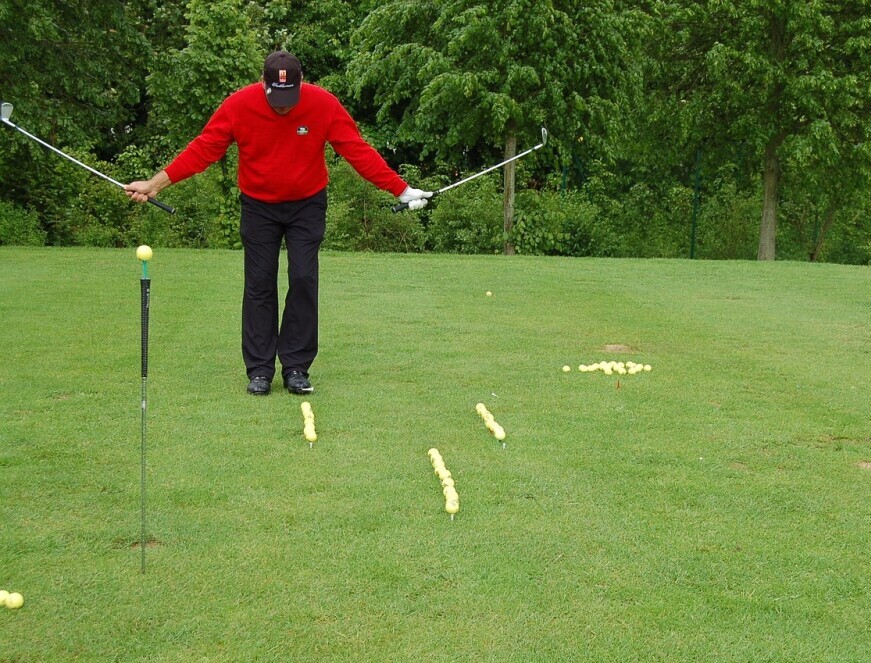
The Ultimate Short Game Practice Routine (30–45 Minutes)
Here’s a complete routine you can use:
Phase 1 – Chipping (10 minutes)
Landing Spot Drill
One-Club Challenge
Phase 2 – Pitching (10 minutes)
Distance Ladder Drill
Random Yardage Drill
Phase 3 – Bunker (5–10 minutes)
Line in the Sand
Splash Zone Drill
Phase 4 – Putting (10–15 minutes)
Gate Drill
Ladder Speed Drill
Circle Drill
This routine hits every scoring area and keeps practice focused and efficient.
How Often Should You Practice the Short Game?
If you want real improvement:
2–3 sessions per week = solid progress
4–5 sessions per week = serious transformation
Even 20 minutes per session is enough if you’re focused.
Consistency beats intensity every time.
Common Short Game Mistakes to Avoid
1. Only practicing perfect lies
Real golf gives you bad lies. Practice them.
2. Ignoring distance control
Speed is king. Always.
3. Never adding pressure
If practice feels easy, it won’t transfer to the course.
4. Changing technique constantly
Pick a method and commit long enough to master it.
Why These Drills Actually Work
These drills:
Train feel instead of mechanics
Mimic real on-course situations
Build confidence through repetition
Develop distance awareness and touch
That’s the secret.
The short game is not about power.
It’s about precision, patience, and control.
If you’re looking for the best clubs to work on your short game, check out my top 10 best wedges for spin.

Creating a Personalized Short Game Practice Routine
Planning a personalized practice routine for your short game means tailoring it toward your needs. It’s not a one-size-fits-all deal. Look at where your weak spots are – maybe it’s inconsistent chip accuracy or the dreaded three-putts. Identifying these areas and concentrating efforts there keeps things focused and efficient.
Lowering your scores often depends on how well you can control the ball spin to stop it dead on the green. Practice hitting different parts of the ball and see how you can make it spin, hop, or stop.
For those wanting an extra layer of mastery, Flight Control Drills are essential. This isn’t just about sending the ball high or low, it’s about shaping it to fit the situation. Alter your swing and adjust your grip slightly to add more height or flatten it out.
Developing mental strategies makes a significant difference. Whether it’s visualizing the outcome before you even swing, or using breathing exercises to keep cool under stress, a sharp mind complements physical skills. Effective strategies often separate the good from the great, allowing you to handle pressure like a champ.
Consistency is the real MVP here. You can’t expect miracles just by hitting the greens once in a while. Keeping a regular routine – even if it’s for short bursts of practice – pays off in the long run. It’s like nurturing a plant; regular care leads to growth, and here, it translates into getting better and more confident swings.
Don’t forget to throw in some creativity and fun. Dodging routine boredom can be a game-changer. Mix things up with friendly competitions or time challenges. It breaks up monotony and adds a fun dynamic to practice, making you more engaged and motivated.
Adjusting your routine based on resources and time is crucial. If you can’t get on the course, backyard chipping or putting practice indoors can hold you over. The trick is to keep practicing, no matter where you are or what you have on hand. With the right mentality and adaptability, you’re always ready to rock that short game.
Final Thoughts: Turn Your Short Game Into a Weapon
If you want the biggest return on your practice time, focus here:
Chipping
Pitching
Bunkers
Putting
You don’t need to hit it farther.
You need to get it closer.
Master these short game practice drills and you will:
Get up and down more
Avoid big numbers
Walk off the course knowing you left nothing out there
And that is how real golfers score.
Getting to grips with advanced short game techniques catapults your golf skills to new heights. It’s about refining the art of precision shots, adding flair, and sometimes a bit of maverick style to your play.
Understanding flop shots and bunker play is where you start upping your game. Flop shots require that fine balance of loft and spin, a kind of art where you’re just letting that ball float magically onto the green.
It’s about using the right strategy and swing to your advantage, not fearing it. Think of it like a smooth dance – rhythm and feel. And there’s nothing more beautiful than the dance of golf. I’ll see you out on the golf course, dancing all the way to the hole.